
Issue 1 ·
The Good Day, Issue 1: Can I trust what I'm about to buy?
For ski area owners, GMs and patrol directors. Every other week.
A guest's day is six moments. This issue takes apart the first one.
- 1Plan
- 2Arrive
- 3Learn
- 4Ride
- 5Get help
- 6Come back
Can I trust what I'm about to buy?
Welcome to The Good Day, a newsletter for ski area owners, GMs and patrol directors. It comes every other week.
A guest's day on your mountain is made of six moments: Plan, Arrive, Learn, Ride, Get help and Come back. Each one has a question in the guest's head and a process behind the answer. When the process is written down and the system holds it, the day works the same on a Tuesday as on a powder Saturday. When it lives in a few people's memory, it works until someone has a bad day.
Each issue takes one moment apart. Today it is Plan, the question every guest asks before they ever see your mountain: can I trust what I'm about to buy?
The teardown
A ticket shop that starts with the date
A guest can trust a ticket shop when it tells them, before they pay, what they will actually get on the day they pick. That takes five steps, and most of the work is deciding the rules once.
Start with the date. The shop opens on a calendar, not a product list. The guest picks the day they want to ski, and everything after that is about that day.
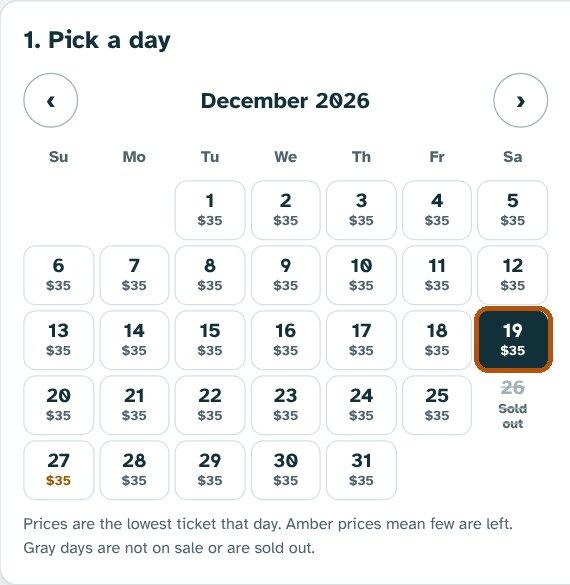
The guest picks the day first. Every price on the calendar is the lowest ticket for that date. Show only what is real for that date. Tickets, lessons and rentals appear if they are on offer that day. A weekday-only ticket does not show up for a Saturday.
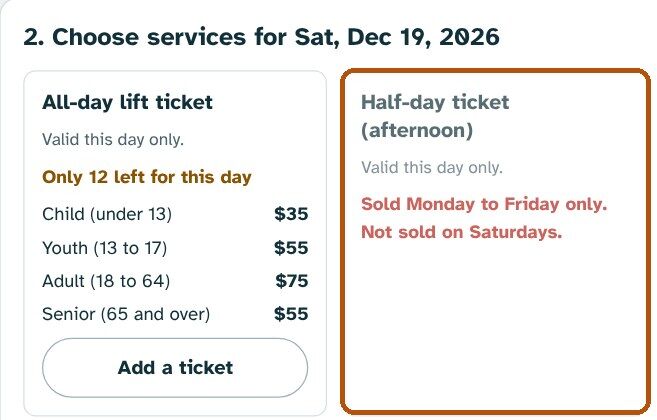
The half-day ticket is weekday-only, so on a Saturday it stays on screen but says why it cannot be bought. Cap the day. Set a limit on tickets or lessons per day, so a good day does not turn into a crowded one. When the cap is reached, the shop says so before payment, not at the window.
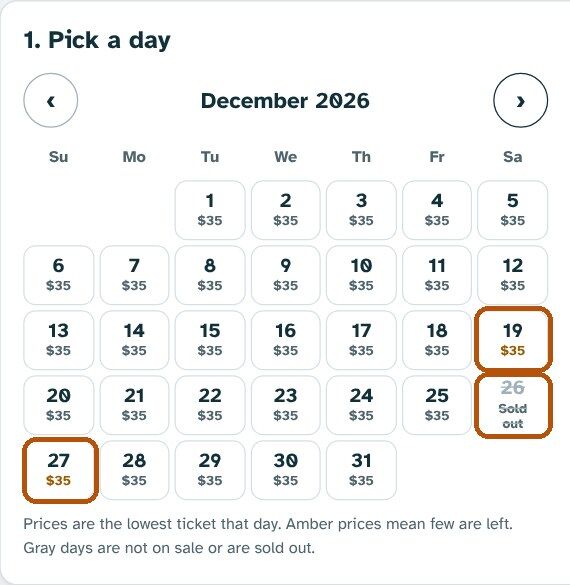
Sold out is struck through. Amber prices mean few tickets are left. The guest knows before checkout. Write the rules where the system can hold them. A lesson that needs a lift ticket, a rental that needs a lesson time, a product sold only on certain weekdays. If a rule lives in someone's head, it gets applied differently by every person at the window.
Confirm in plain words. After payment, the guest gets what they bought, for which day, and what to do next. No guessing.
Where it usually breaks
The product list comes first and the date comes last, so the guest finds out about a sold-out day after paying. Or the weekday rule exists on paper but not in the shop. Or the cap is real but only one person knows it.
A quick test
Pick your three busiest days. For each, can a guest see, before paying, what is available and what is not? If the answer depends on who is working that day, the process is not written down yet.
The number to watch
Questions asked before buying
Count how many guests contact you before buying to ask what is available, as a share of all orders. A guest who has to call or email before paying is telling you the shop did not answer the question.
How to measure it without any new software:
- For two weeks, keep a tally of every call, email or message that asks about availability, dates, caps or rules before a purchase.
- Divide by the number of orders for the same two weeks.
- Write the result down, then compare it with the same two weeks next month.
Do not compare yours with anyone else's. The only comparison that matters is your own, month over month, after you change a rule or a page.
What shipped
New in Verdynt/OS
2026.11.7. Moment 1: Plan. Season passes can be bought online again: the guest takes the pass photo with their phone right in the shop, and a pass that needs a photo is never issued without one. The pass is done at home, not in the opening-day line. Where to find it in the app: Settings, Online shop.
2026.11.7. Moment 1: Plan. A rental or lesson pack bought online now belongs to the person on that ticket, on the day they ski, at their guest type's price. The family finds their rentals waiting in Ready to fit instead of starting over at the counter. Where to find it in the app: Rentals, Ready to fit.
2026.11.7. Moment 1: Plan. The day limit holds at the window too: staff see when a day is full, and only a manager can sell past it, with a reason that is kept. Online, a guest who asks for more than are left sees "Only 1 left", not "Sold out". Where to find it in the app: Sell, and each product's daily limit.
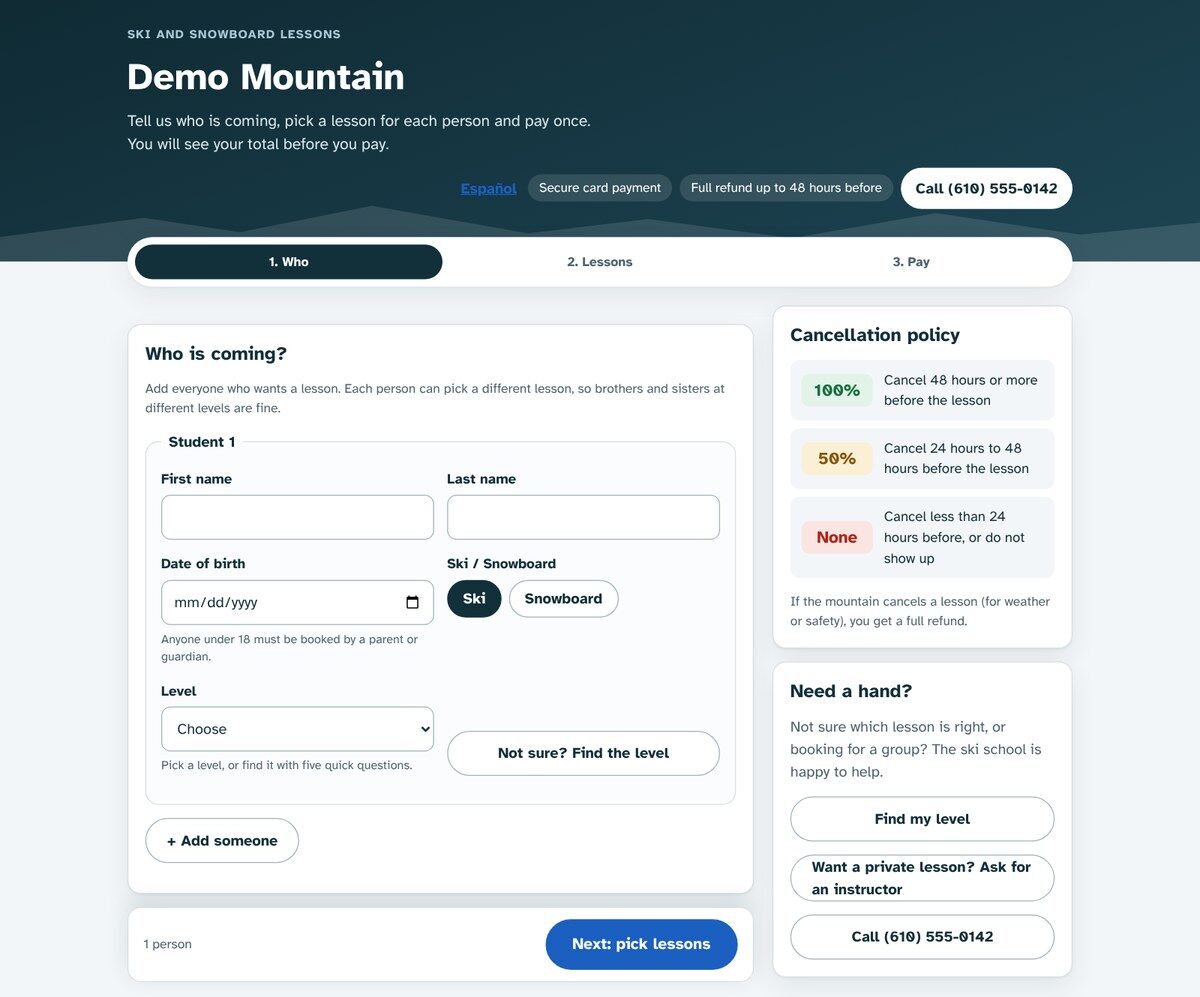
2026.11.5. Moment 3: Learn. The ski school, rebuilt: families book by person, with a five-question Find my level, siblings in different lessons and one payment, and a confirmation with the time, the meeting place and what to bring. Parents know where to go and who has their kid. Where to find it in the app: Ski school, and your lesson booking page.
From the sideline
Decide it before game day
In sport, the set plays are practiced the same way every week. The point is not to be clever on game day. It is to have the decisions already made, so that when the game gets fast and loud, the team runs what it has rehearsed instead of inventing something.
I have coached long enough to see the difference. Teams with a clear plan stay calm when it goes wrong. Teams that improvise from memory get through the easy games and struggle in the hard ones.
Your busiest Saturday is game day. The daily cap, the weekday rule and the sold-out message are your set plays. Decide them in the off-season, write them down, and let the window run them.
Your turn
Where does your day break?
The Good Day scorecard is on its way: 18 questions, three for each moment, about 10 minutes. It shows which moment of your guest's day is weakest, and a first step for fixing it. Subscribers get it first.
Subscribe to get it firstOne ask: reply and tell me your lowest moment. I read every reply.
Next issue: Learn. Is my kid in good hands?
The Good Day · for ski area owners, GMs and patrol directors
Get the next issue.
Every other week, one moment of your guest's day taken apart. Next: Learn, "Is my kid in good hands?"